
New York Busted Mugshots
New York busted mugshots and arrest records are kept by law enforcement in all 62 counties. You can search for booking photos, check criminal charges, and look up inmate info through county sheriff sites and state databases. The New York State Division of Criminal Justice Services runs the main criminal history system, while each county sheriff keeps local arrest logs and jail rosters. Some counties let you search their inmate list right from a web page. Others need a phone call or a written request. This page walks you through how to find New York busted mugshots and arrest records at the state, county, and city level.
New York Arrest Records Overview
Where to Find New York Busted Mugshots
New York has a few state-run systems that hold arrest records and booking data. The biggest one is the DOCCS Incarcerated Individual Lookup. It covers all 44 state prison facilities. You can search by last name, birth year, DIN, or NYSID. The DIN format uses two digits for the year, a letter for the reception center, then four sequence digits. The system pulls real-time data from the main database. It stays up 24 hours a day except for a short break near midnight for server work.
Records in the DOCCS system go back to the early 1970s. It lists both current and some former inmates. Correction Law § 9 says DOCCS must take down info for non-violent offenders three years after they finish their sentence. But violent felony offenders, sex offenders, and Class A felons stay on the list for good. The lookup does not show youthful offenders sealed under CPL §720.35 or cases where a court set aside the conviction.
The DCJS Criminal History Records page is the state's official rap sheet system. These records hold arrest, indictment, conviction, and sentence data sent in by police, DAs, and courts. They are fingerprint-based. DCJS does not hand these out under FOIL and does not sell them to background check firms. Only the person named on the record or certain approved groups can ask for them.
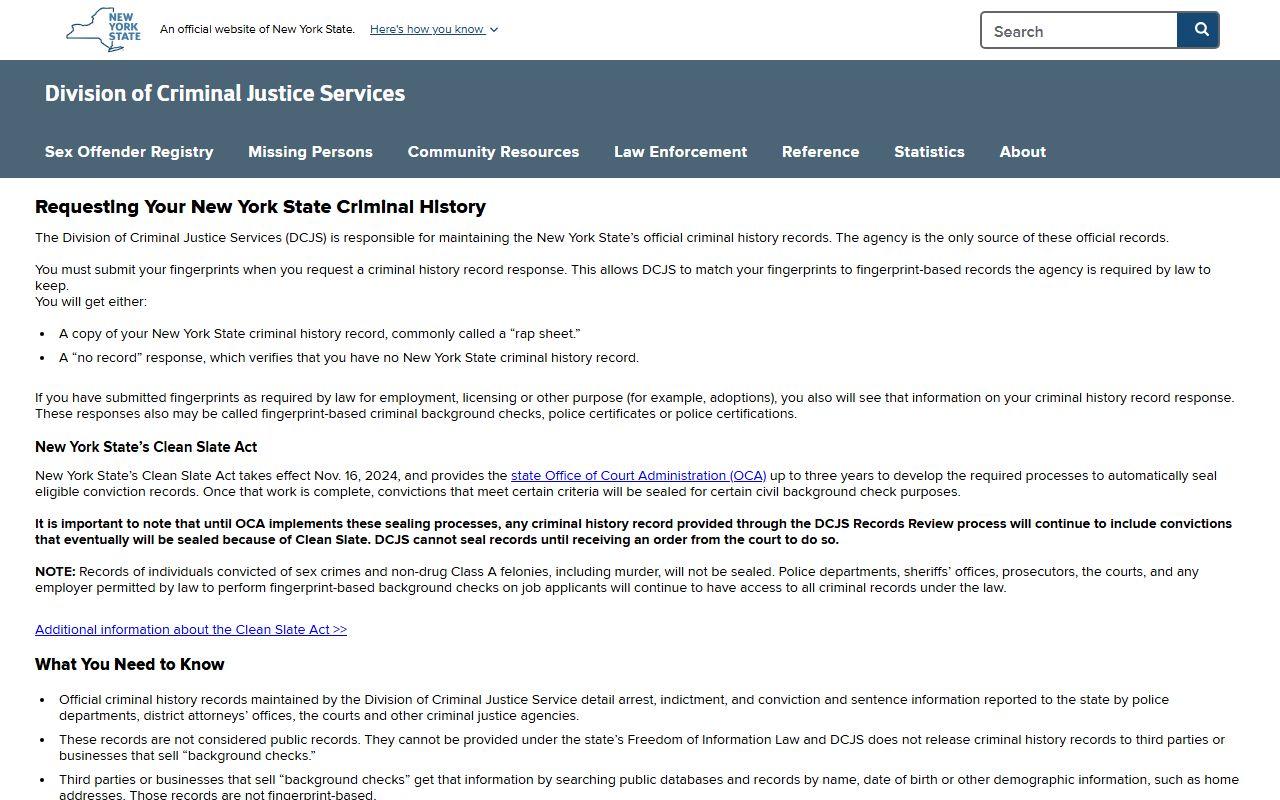
The Clean Slate Act took effect on November 16, 2024. It gives the Office of Court Administration up to three years to build a system that seals some older convictions on its own. Sex crimes and non-drug Class A felonies like murder will not be sealed. Law enforcement and certain approved groups will still see the full record. Until OCA builds the process, all convictions still show up in the DCJS system.
New York Busted Mugshots and Court Case Lookup
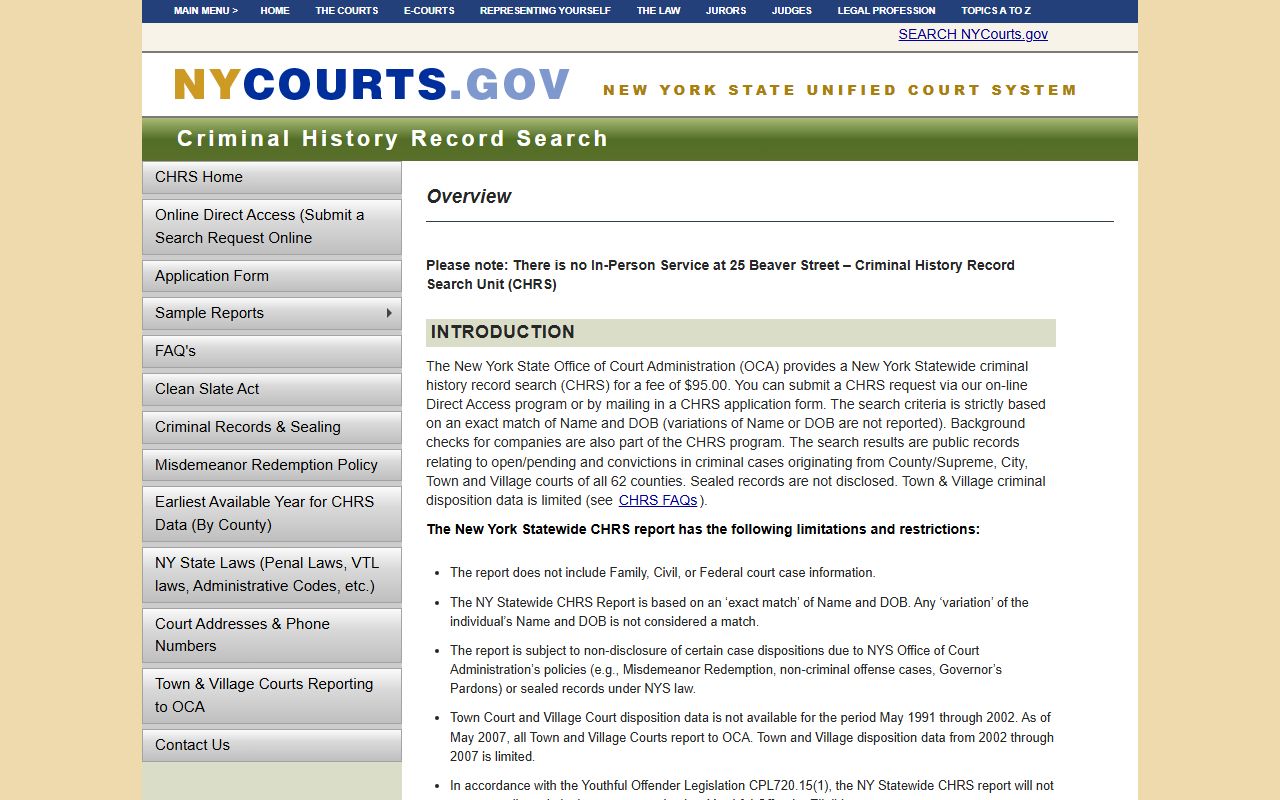
The OCA Criminal History Record Search is a name-based search you can run online. It costs $95 per search. You pay by credit card or bank account when you submit. The search looks for an exact match on name and date of birth. Results cover open cases and convictions from all 62 counties. Town and village court data is limited since not all of them report to OCA. Sealed records do not show up. The results are not certified.
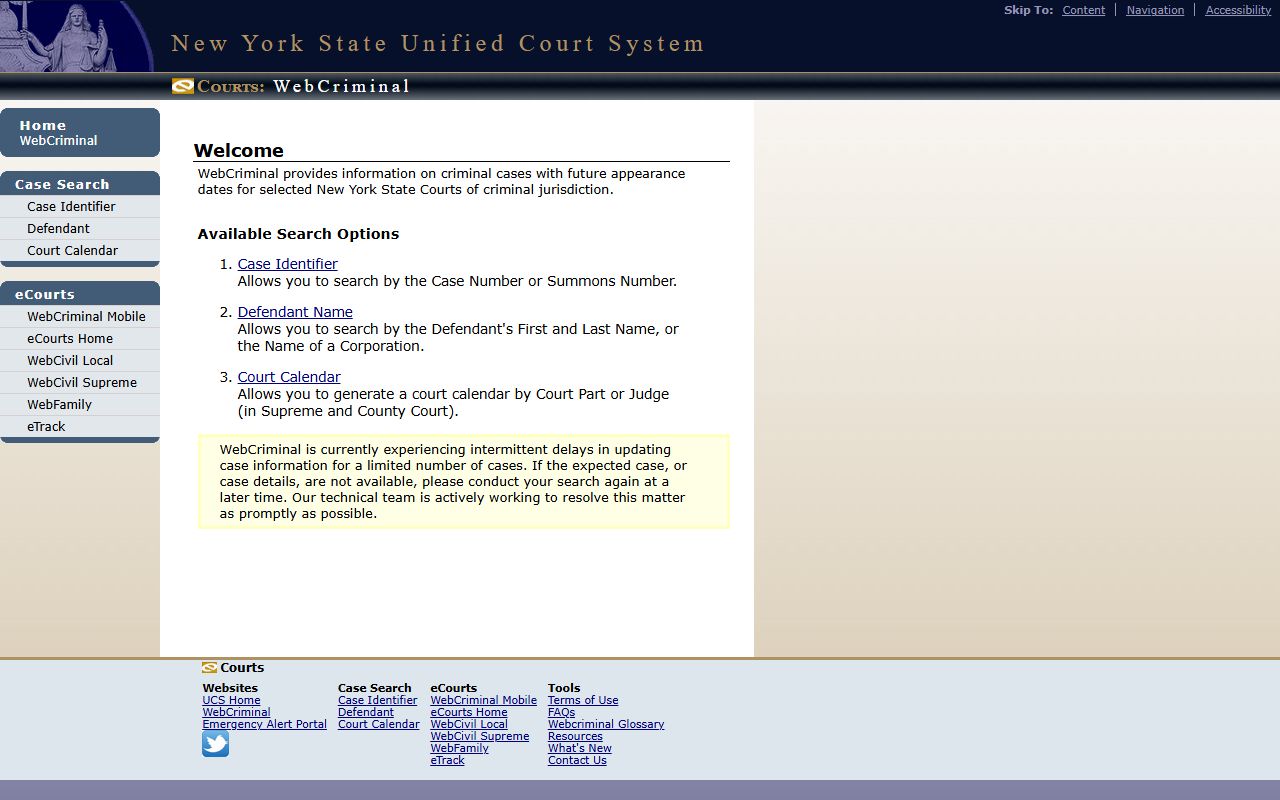
WebCrims is a free tool from the Unified Court System. It shows pending criminal cases with future court dates in 13 counties plus NYC summons cases. You can search by case number, name, or court calendar. It only has active cases. Once a case is done, it drops off. A mobile version is also out there for quick checks on your phone.
For public account users, the CHRS caps you at five searches per request. Corporate accounts need prior use of the program and let you pay by bank draft. Requests that come back with no results get sent in real time. But if any name on the request hits a record, the whole batch goes to a reviewer. Results come by email on business days between 9 AM and 5 PM. You can also mail in a paper form to the OCA office at 25 Beaver Street, Room 940, New York, NY 10004.
Busted Mugshots Through FOIL Requests
The Freedom of Information Law gives you the right to ask for government records. That includes arrest records held by police and sheriff offices. A "record" under FOIL means just about any form of stored info: reports, files, photos, computer data, and more. Agencies must reply within five business days. If they need more time, they have to say so in writing and give you a date. Copies run about $0.25 per page.
Arrest records at police departments fall under FOIL, but there are limits. Records sealed under CPL §160.50 are off the table. That statute says when a case ends in the accused person's favor, all related papers get sealed. This includes acquittals, outright dismissals, and dismissals after an adjournment in contemplation. Photos, prints, and palmprints must be destroyed or sent back. The law has been around since 1976.
The State Police FOIL page takes requests for state police records. You need to give them the incident number, location, date, time, and names with dates of birth. Send it by mail to 1220 Washington Avenue, Building 22, Albany, NY 12226-2252 or use the online GovQA form. State Police only keeps records for cases they handled. Local arrests go through the local agency.
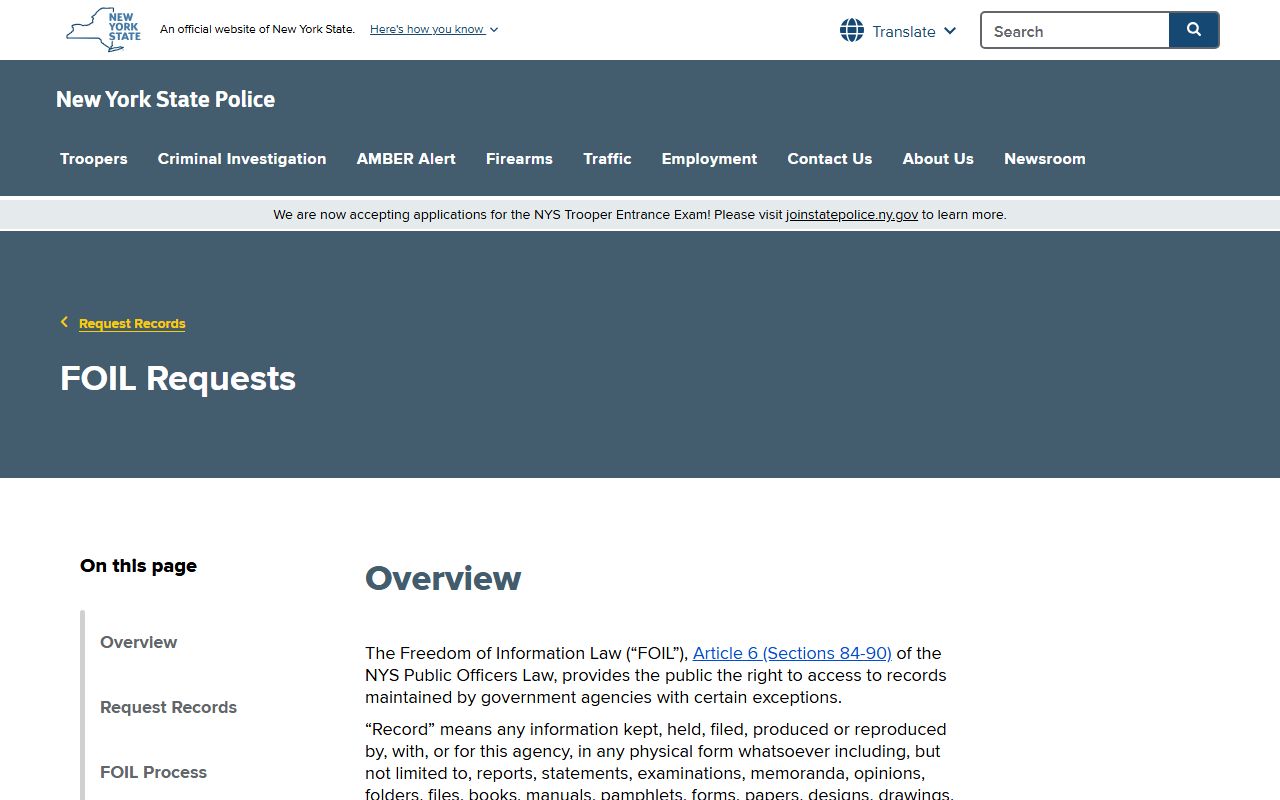
Some things FOIL does not cover when it comes to law enforcement. Agencies can deny records that would get in the way of an active investigation. Intra-agency memos and some personal privacy items are also exempt under Public Officers Law §87(2). Physical evidence like clothing is not a "record" at all. If your FOIL request gets denied, you have 30 days to appeal.
Note: FOIL requests go to the specific agency that has the record. County sheriff records go to the sheriff. City police records go to that police department.
Busted Mugshots and Other State Databases
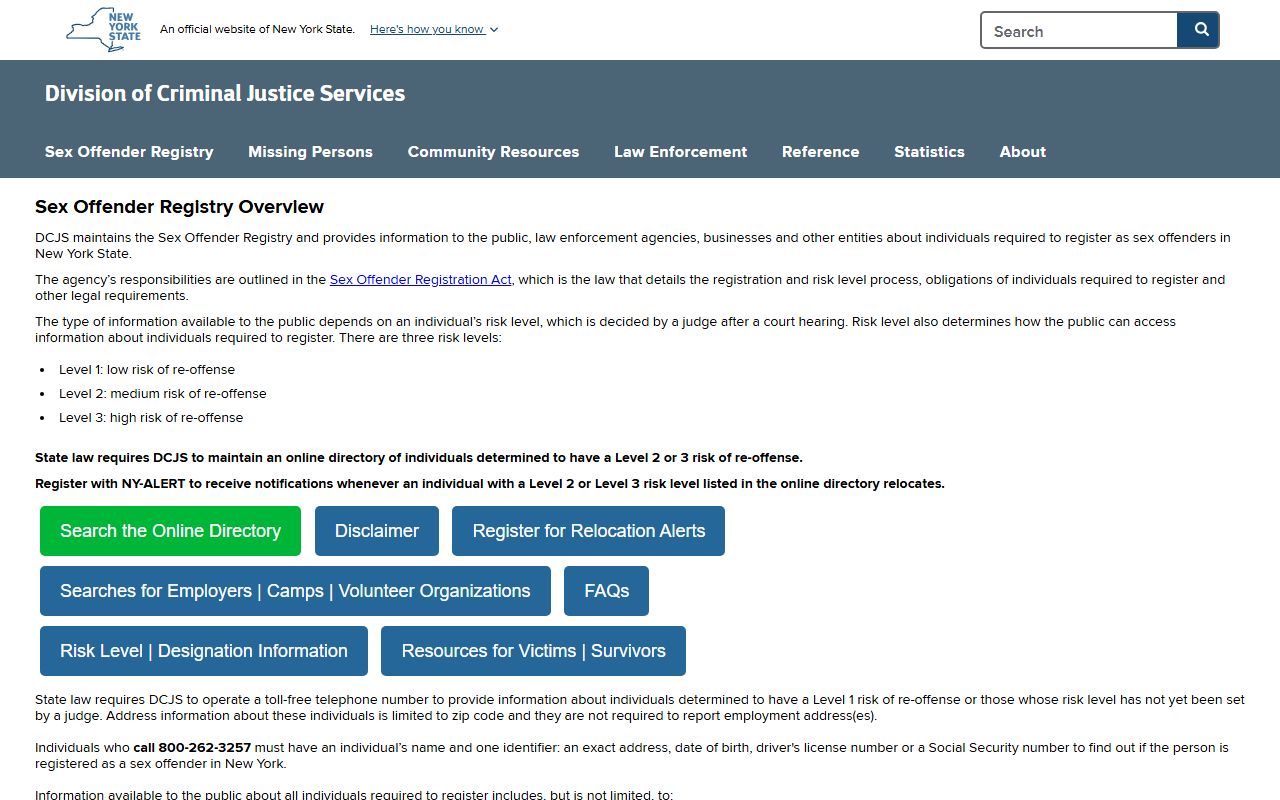
The Sex Offender Registry run by DCJS tracks offenders by risk level. Level 1 is low risk, Level 2 moderate, Level 3 high. Only Level 2 and 3 show up in the online search. For Level 1 offenders, call 800-262-3257 with the person's name plus one ID piece like a date of birth or address. Level 1 offenders register for at least 20 years. Level 2 and 3 register for life. The NY-ALERT system can send you a notice when a listed offender moves.
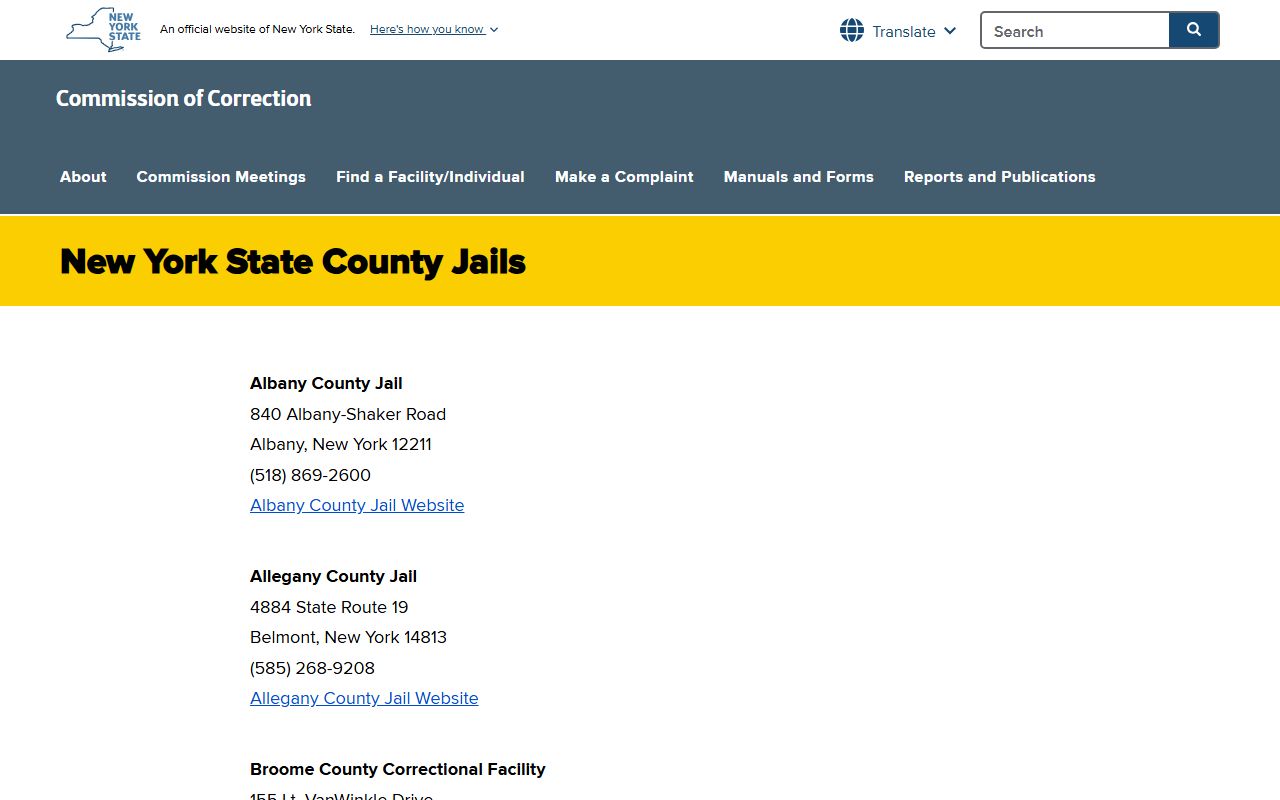
The State Commission of Correction keeps a directory of all 62 county jails. Each listing has the address, phone, and a website link when one exists. The Commission sets minimum standards for county facilities and checks that they follow the HALT Act rules on solitary confinement. County jails hold pretrial folks and anyone doing a year or less. State prison is for sentences over a year.
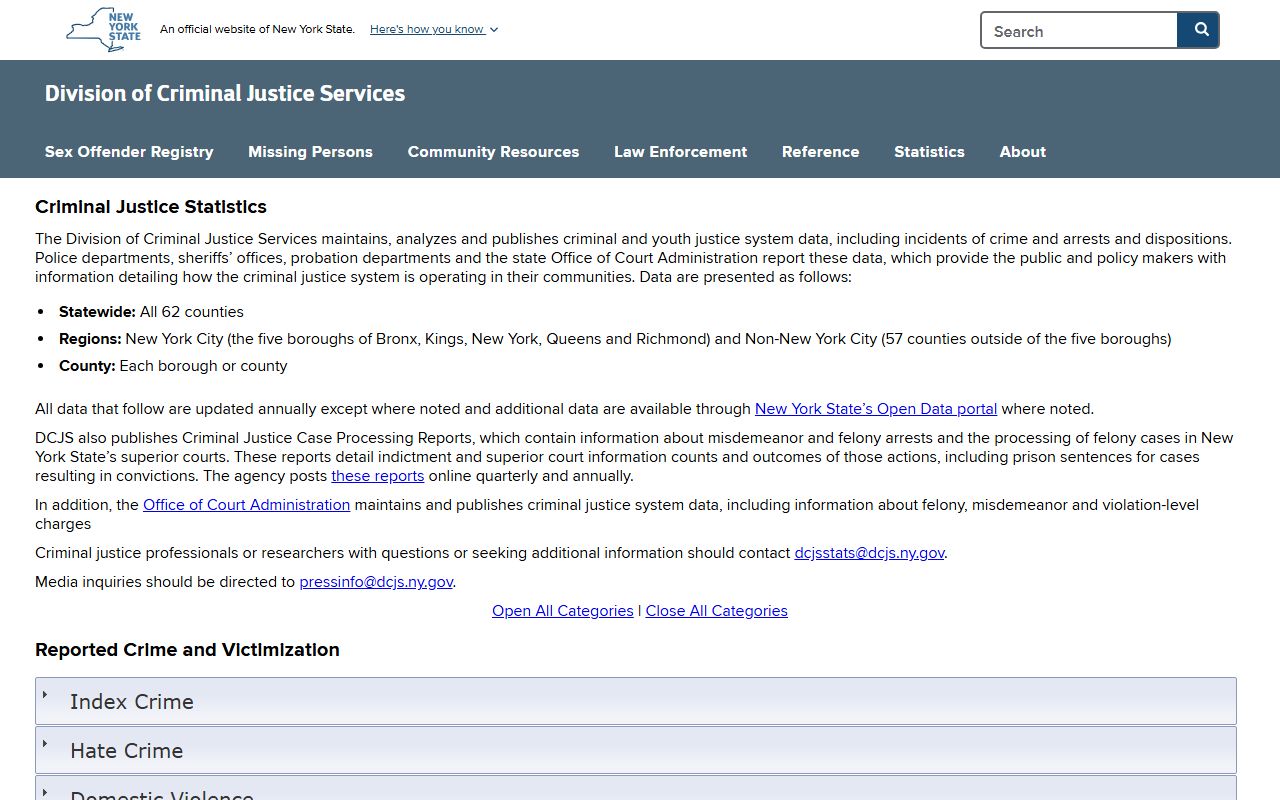
Criminal justice stats are at the DCJS statistics page. Data covers seven index crimes, hate crime, domestic violence, and gun violence. You can view numbers statewide, by region, or by county. The NYS Open Data Portal has downloadable sets going back to 1970 for adult arrests. Formats include CSV, JSON, and XML. All of it is free.
New York Arrest Record Sealing Laws
CPL §160.50 is the main sealing statute. It kicks in right after an acquittal, dismissal, or ACD under CPL 170.55 or 170.56. All official papers at DCJS, courts, police, and DA offices get sealed. They cannot be given to any person or agency, public or private. The goal, as the legislature put it in 1976, is to make sure someone who was charged but not convicted does not carry a stigma from an accusation that went nowhere.
Sealed records under 160.50 can still be seen by a short list of groups. The defendant or their agent can get them. A DA can see them if the defendant asks for an ACD. A law enforcement agency can get a court order from a superior court. Gun licensing agencies, parole, and probation can also access them. Prospective police or peace officer candidates may have theirs reviewed too.
For young people, CPL §720.35 handles youthful offender cases. A "youth" here means someone who was 16 to 18 at the time of the crime. The court grants YO status at sentencing to spare the person a criminal record. All papers get sealed automatically. A YO finding is not a conviction. The longest prison term a YO can get is one and a third to four years.
Correction Law §752 bars discrimination in hiring or licensing based on a prior conviction unless the offense has a direct link to the job or license, or granting it would pose an unreasonable safety risk. This matters when arrest records come up in a legal context outside of law enforcement.
Browse New York Busted Mugshots by County
Each of New York's 62 counties has a sheriff that keeps arrest records and jail data. Pick a county below to find local contact info and resources for busted mugshots and arrest records in that area.
Busted Mugshots in Major New York Cities
City arrests in New York go through the county sheriff or a local police department. Pick a city below to find out where to look for busted mugshots and arrest records in that area.