
New York City Busted Mugshots
New York City busted mugshots and arrest records come from the largest police force in the country. The NYPD handles hundreds of thousands of arrests each year across five boroughs, and the NYC Department of Correction runs one of the biggest jail systems in the nation. Finding arrest records here means dealing with multiple agencies at the city, county, and state level. Whether you need booking data from Central Booking or want to look up an inmate in city custody, this page walks through every source and how to use them. NYC processes more arrests than most states do on their own.
New York City Arrest Records at a Glance
NYPD Busted Mugshots and Booking Records
The New York City Police Department is the main law enforcement agency for all five boroughs. That covers Kings County (Brooklyn), Queens County, Bronx County, Richmond County (Staten Island), and New York County (Manhattan). Every arrest in the city goes through NYPD first. The department has over 36,000 sworn officers and handles everything from misdemeanor desk appearances to felony bookings at Central Booking.
After an arrest, the person goes to a borough Central Booking facility for processing. This is where fingerprints get taken, mugshots are captured, and charges are filed. For general booking inquiries, call 311 or (212) 639-9675. The processing can take anywhere from a few hours to over 24 hours depending on the borough and how busy things are. Manhattan tends to be the slowest.
NYPD uses CompStat 2.0 to track crime and arrest data across every precinct. This system gives the public access to crime stats broken down by precinct, borough, and type of offense. The data updates regularly. While CompStat does not show individual arrest records or busted mugshots, it tells you a lot about arrest patterns in any given area of the city.
The NYPD website shows arrest data by category. This includes crime stats and weekly CompStat reports for each precinct. It is a good starting point for understanding how many arrests happen in a specific part of the city.
NYPD also maintains its own records division. You can submit FOIL requests to the NYPD Legal Bureau for arrest reports, incident reports, and related documents. Written requests go to NYPD FOIL Unit, One Police Plaza, Room 110C, New York, NY 10038. Response time varies. Simple requests may come back in a week or two. More involved ones can take months.
NYC Inmate Lookup for Busted Mugshots
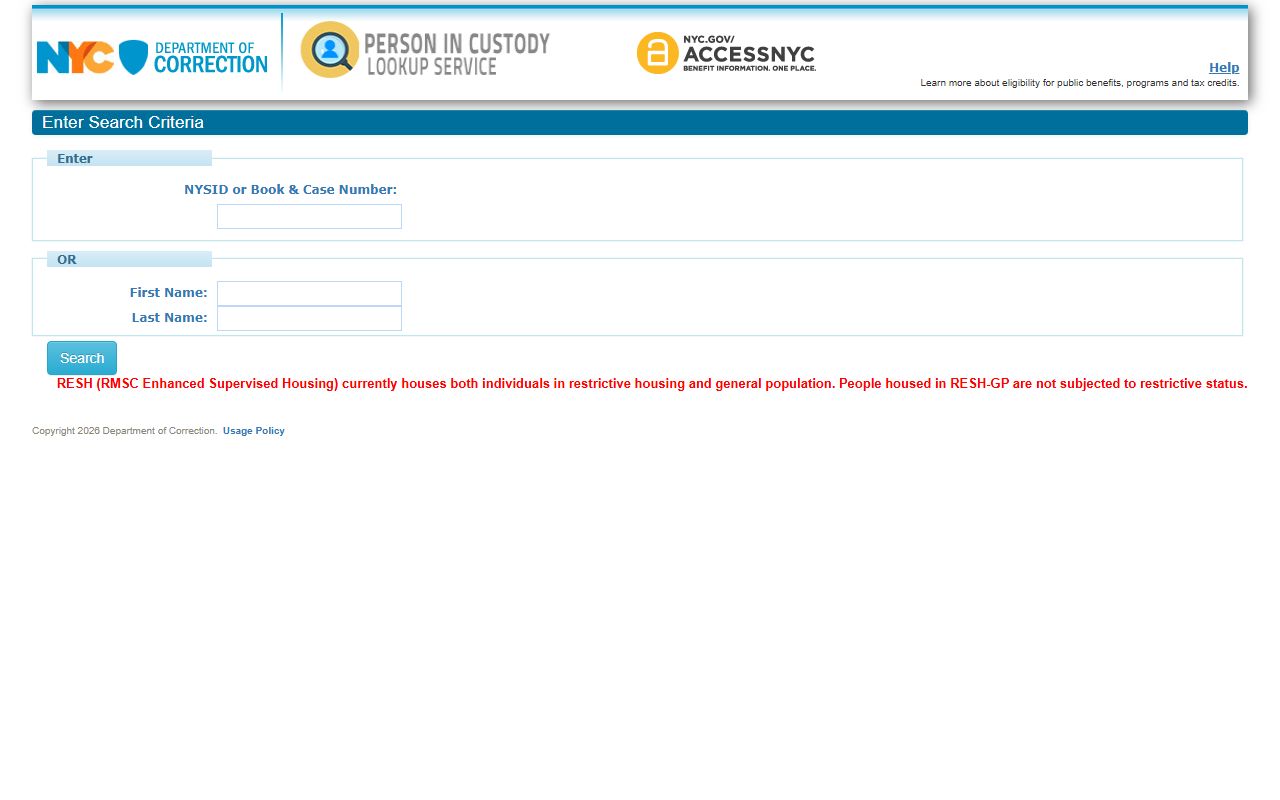
The NYC Department of Correction Inmate Lookup is the main tool for finding someone in city jail custody. The system lets you search by NYSID number, Book and Case Number, or by name. Results include the person's name, age, facility, and next court date. The database holds records from September 2005 forward.
The NYC DOC runs the Rikers Island complex and several borough facilities. When someone is arrested and held on bail or remand, they go into DOC custody. The inmate lookup updates as people move between facilities or get released. It does not show mugshots directly, but it confirms whether someone is currently in custody and where they are being held.
If the person you are looking for is not in the DOC system, they may have been released, transferred to state custody, or they might be in federal custody at the Metropolitan Detention Center in Brooklyn or the Metropolitan Correctional Center in Manhattan. Federal inmates show up in the Bureau of Prisons inmate locator, not the city system.
The DOC also runs a call center. You can call and ask about someone's status if the online tool is not working or if you need more details than what shows on screen. Hours and wait times vary.
New York City Arrest Records and FOIL
The Freedom of Information Law applies to all city agencies including the NYPD. Under FOIL, arrest records are generally public. That includes booking sheets, mugshots, and arrest reports. The key exception is records sealed under CPL §160.50. When charges get dismissed or a person is acquitted, the arrest records get sealed automatically. Sealed records cannot be released to the public.
FOIL requests to NYPD should include the person's full name, date of birth if you have it, and the approximate date and location of the arrest. More detail means faster processing. Vague requests get bounced back or delayed. There is no fee to file a FOIL request, but copies cost $0.25 per page. The agency has five business days to acknowledge your request, then a reasonable time to fulfill it.
Each borough district attorney's office also has records you can request through FOIL. These include charging documents, plea agreements, and sentencing information. The five DAs operate independently of each other. A case in Brooklyn goes through the Kings County DA, while a case in Manhattan goes through the New York County DA.
Busted Mugshots and NYC Court Records
WebCrims is the state court system's free tool for finding pending criminal cases in New York City. It shows cases with upcoming court dates. You can search by defendant name, docket number, or court calendar. Once a case concludes, it drops off the system. WebCrims covers all five boroughs and updates daily.
NYC has a complex court structure. Each borough has its own criminal court for misdemeanors and a Supreme Court for felonies. The Criminal Court of the City of New York handles arraignments and misdemeanor trials. Supreme Court handles indicted felony cases. Family Court deals with juvenile matters. Some cases also go through specialized courts like drug courts or mental health courts.
For older or concluded cases, the DCJS Criminal History Records program lets individuals get their own rap sheet for $65. This is a fingerprint-based search that covers the entire state, not just NYC. The OCA Criminal History Record Search costs $95 and is available to anyone with the subject's name and date of birth. Neither tool is free, but both are thorough.
State Databases for NYC Arrest Records
If someone arrested in New York City ends up in state prison, the DOCCS Incarcerated Lookup shows their current status. This tool covers everyone in state custody. You can search by name or DIN (Department Identification Number). Results include the facility, earliest release date, and crime of conviction. It does not cover city or county jail inmates.
The Sex Offender Registry lists registered sex offenders throughout New York City. Level 2 and Level 3 offenders appear in the online search. Level 1 offenders require a phone call to 800-262-3257. Given the city's population, NYC has a significant number of registered offenders across all five boroughs.
The Clean Slate Act went into effect on November 16, 2024. Under this law, certain older convictions will be sealed automatically after a waiting period. Misdemeanors seal after three years, and some felonies seal after eight years from the end of the sentence. The Office of Court Administration has up to three years to build the system. Not all felonies qualify. Serious offenses like sex crimes and violent felonies are excluded from automatic sealing.
Five Boroughs and County Records
New York City sits across five counties. Each county has its own clerk, district attorney, and court system, even though the city operates as one jurisdiction for policing purposes. For arrest records, the borough where the arrest happened determines which county court handles the case.
Manhattan is New York County. Brooklyn is Kings County. Queens is Queens County. The Bronx is Bronx County. Staten Island is Richmond County. When looking up busted mugshots or court records, knowing the right county matters. A search in one county's system will not pull up results from another borough.
The county clerks keep court records including criminal case files. Each county clerk's office lets you search for filed documents. Some have online portals. Others require an in-person visit or mail request. The Supreme Court records in each county are accessible through the court system's eFiling portal for attorneys, while the public can use FOIL to get copies.